
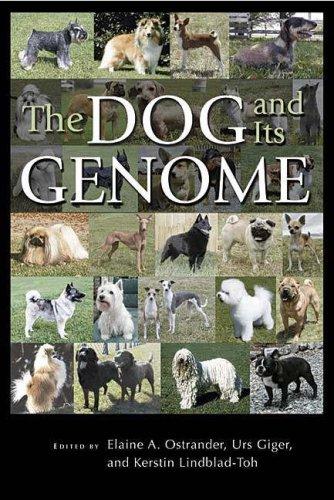
The Dog and Its Genome
Bibliographic Collection:
Anthropogeny
Publication Type: Book
Authors: Ostrander, Elaine A; Giger, Urs; Lindblad-Toh, Kerstin
Year of Publication: 2006
Series Title: Cold Spring
Volume: 44
Number of Pages: 584
Publisher: Cold Spring Harbor Laboratory Press
City: Cold Spring Harbor
Publication Language: eng
ISBN Number: 0879697423
Keywords: Animals, Breeding., Dogs, Domestic
Abstract:
Because of the remarkable diversity into which dogs have been bred, they make an ideal model for studying gene plasticity. Along with colleagues from the U. of Pennsylvania School of Veterinary Science and MIT/Harvard U., Ostrander (National Human Genome Research Institute, National Institutes of Health) introduces 25 chapters by experts in fields relating to canine genomics. Topics discussed include dog origins and domestication, morphologic and behavioral variation, and the value of man's best friend as an emerging model for understanding diseases such as cancer and diabetes. Illustrations include a color gallery of recognized dog breeds, phylogenetic trees, and other genetic analyses.
Label: 1980
Export:
UCSD Library URL:

