
Wild Apes: Insights for Human Origins
Biographical Sketches: Co-Chairs
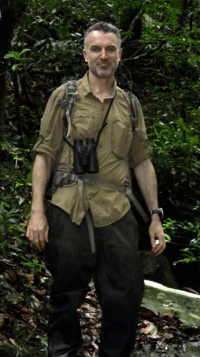
University College London
Alex received his BA in Animal Behavior from Bucknell University (2001), his MA in Anthropology from Iowa State University (2004), and his PhD from UCSD (2014). He has studied endangered teal in Madagascar, wild chimpanzees in Fongoli, Senegal, and blue monkeys in Kakamega Forest, western Kenya. He is currently a lecturer in Animal Behaviour at Liverpool John Moores University in the UK, and directs the Greater Mahale Ecosystem Research and Conservation Project (GMERC) in Tanzania. When not at LJMU, he spends his time in western Tanzania where he studies primate adaptation to dry, open habitats and specifically, vocalization behaviour in chimpanzees and red-tailed monkeys. With Fiona Stewart, he oversees broader, landscape wide censuses and monitoring of priority chimpanzee habitat for conservation planners.
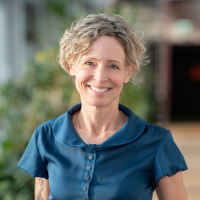
Max Planck Institute for Evolutionary Anthropology
Tracy Kivell is a paleoanthropologist whose research focuses on the evolution of the skeleton in living and fossil primates, including our human ancestors (hominins), to further our understanding of the evolution bipedal locomotion, manipulation and tool use throughout our evolutionary history. Tracy aims to better understand the relationship between bone shape and function through analyses of ontogeny (development), internal (trabecular and cortical) bone structure, and the biomechanics of primate locomotion.
Biographical Sketches: Speakers

University College London
Aida Andrés is an evolutionary population geneticist that investigates how populations evolve and adapt to their environment. She is Professor and Director of the UCL Genetics Institute (UGI), Department of Genetics, Evolution and Environment (GEE). She is also a member of the Centre for Computational Biology and the Human Evolution at UCL Network.
She obtained her PhD from the Universitat Pompeu Fabra (Barcelona, Spain) under the supervision of Prof. Jaume Bertranpetit. After two postdoctoral positions, at Cornell University (NY, USA) in the group of Prof. Andrew G. Clark and the National Human Genome Research Institute, NIH (MD, USA) with Dr Eric Green, in 2010 she launched her research group at the Max Planck Institute for Evolutionary Anthropology in Leipzig (Germany), under the direction of Prof. Svante Paabo.
Selected positions of trust include: Since 2025: Director, UCL Genetics Institute; Since 2021: Associate Editor, Genome Biology and Evolution; Since 2022: Member of the BBSRC Pool of Experts that constitute panels for grant funding; 2019-2025 Co-director, London Centre for Ecology and Evolution; 2021-2025 Head of the EDI team of GEE; 2021-2025 External Examiner, University of Sussex.
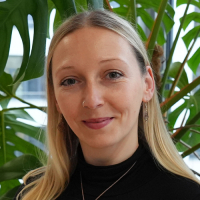
Max Planck Institute for Evolutionary Anthropology
Charlotte King is a Minerva Group Leader at the Max Planck Institute for Evolutionary Anthropology. Her research investigates ape locomotor biomechanics and comparative morphology to inform reconstructions of locomotor behaviour in extinct hominoid. King has a particular interest in applying machine learning and computer vision to advance behavioural and biomechanical analyses.
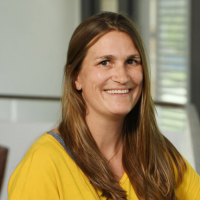
Max Planck Institute for Chemistry
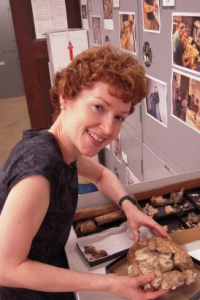
I investigate early hominin diets and their ecological context, with a particular focus on the onset and evolution of meat consumption and the position of Plio-Pleistocene hominins in African food webs. My research uses stable isotope analyses of tooth enamel to reconstruct diet and trophic ecology, combining studies of fossil hominins and associated fauna with work on living primates as comparative models for interpreting the dietary ecology of our early ancestors.
A major focus of my recent work is the development and application of enamel-bound nitrogen isotope analysis as a new paleodietary proxy. Applying this approach to early hominins for the first time, my colleagues and I showed that Australopithecus from Sterkfontein, South Africa, did not regularly consume mammalian meat. In parallel, we investigate the isotopic ecology of wild primates, including chimpanzees and baboons from Issa Valley, Tanzania, to better understand how dietary behaviors such as insect consumption and plant-based feeding are expressed isotopically and how these patterns can inform interpretations of fossil hominin diets.
More broadly, I reconstruct the Neogene landscapes inhabited by early hominins, examining C4 grassland expansion and changes in seasonality, precipitation, temperature, and tree cover. My work combines field research with stable isotope and geochemical approaches applied to fossil tooth enamel, pedogenic carbonates, and other environmental archives across eastern and southern Africa and at younger out-of-Africa sites.
My overarching goal is to understand how dietary flexibility and changing resource use shaped hominin adaptation and evolution, and how studies of living primates can help us distinguish among the dietary strategies preserved in the fossil record.
University of Michigan
Laura M. MacLatchy is a Professor, Department of Anthropology and an Associate Research Scientist, Museum of Paleontology at the University of Michigan. She is a paleoanthropologist interested in understanding the relationship between biological form and function, with research foci on primate locomotor evolution, and hominoid (ape and human) origins.

University of Algarve, Portugal
Tomos Proffitt is a reseacher at the Interdisciplinary Center for Archaeology and Evolution of Human Behaviour, University of Algarve, Campus de Gambelas, Portugal. Proffitt is a Palaeolithic archaeologist interested in technology and how it shapes behaviour. Specifically, his research focuses on how and when the first technology emerged in our linegae, how and why it developed and varied over time and how it was made and used. To these ends, Proffitt focuses on traditional archaeological techniques such as excavation, lithic analysis and GIS, as well as experimental archaeology and primate archaeology. He is currently invovled in research in Brazil, East and West Africa, the United Kingdom and Thailand, and he is also interetsed in how new technological advancemnts can help us better interogate the archaeological record. Profitt completed his PhD at University College London (UCL) in 2016, where he studied the Oldowan archaeological assemblages from Olduvai Gorge in Tanzania. After his PhD, Proffitt worked as a postdoctral researcher at the University of Oxford, where he was fortunate to be able to study primate stone tool use. After that, he moved back to UCL as a British Academy Fellow and in 2020 as a researcher at the Max Planck Institute for Evolutionary Anthropology in Leipzig.
Max Planck Institute for Evolutionary Anthropology
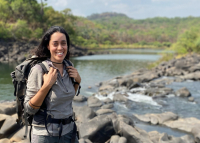
Liran Samuni leads the Cooperative Cultures Reseacrh Group at the Max Planck Institute for Evolutionary Anthropology. She is an Emmy Noether recipient and was previosuly a Group Leader at the German Primate Center (DPZ) and a Postdoctoral Fellow at the department of Human Evolutionary Biology in Harvard. Samuni is a Leakey Foundation grantee and the 2021 recipient of the Gordon Getty Award. She completed her PhD in Biology at the Max Planck Institute for Evolutionary Anthropology in 2019 and received her Masters in Zoology from the Tel-Aviv University in 2013. She studies the intersection between intergroup dynamics, cooperation, and culture in chimpanzees and bonobos, our closest living relatives, as windows into our own evolutionary past. She approaches these questions by observing wild chimpanzees at the Taï National Park, Côte d’Ivoire and the Moyen Bafing National Park, Guinea, and wild bonobos at the Kokolopori Bonobo Reserve, DR Congo.
Max Planck Institute of Animal Behavior
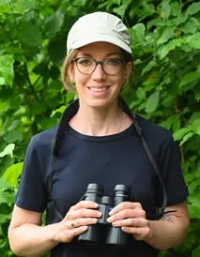
I am an Evolutionary Biologist and broadly interested in the evolution and development of cognition. I aim to understand how different aspects of sociability and environmental complexity are interrelated with the evolution of enhanced cognition. Rather than cognitive potential, cognitive abilities are the evolutionary relevant units of cognition. Because in most species with high cognitive abilities those are heavily shaped by developmental factors, I am especially interested in the factors that affect the development of cognitive abilities.
My main research focus lies on the development of cognitive performance, ecological skills, and cultural repertoires in immature wild orangutans. I direct the SUAQ orangutan research project at the Suaq Balimbing monitoring station in South Aceh Indonesia, where orangutan research has been conducted since the 1990ties. My team and I have been following a group of immature orangutans with their mothers and other association partners since 2010. These longitudinal and cross-sectional data allow us to investigate which factors during immaturity affect orangutans’ cognitive performance as well as the size and complexity of their skill repertoires. By comparing multiple populations and species of orangutans I aim draw conclusions on the evolutionary level. By investigating broader patterns across a wider range of species and using different comparative approaches, I aim to also shed light on the connection between cognitive development, life history traits, and cognitive evolution across species.
University of California Los Angeles
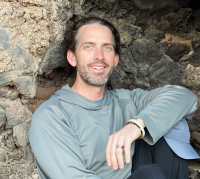
Brian Wood is an evolutionary anthropologist whose research focuses on the behavioral ecology of hunter-gatherers. He is interested in learning how basic challenges of survival and reproduction that arise from life as a hunter-gatherer have shaped human biology, behavior, and culture. Wood has been carrying out research with the Hadza community of northern Tanzania since 2004. His research is interdisciplinary and involves a mix of quantitative and qualitative methods. Foraging and food sharing, mobility, and social organization are core themes of his research. Wood also study the demography and life history of our closest primate relatives, wild chimpanzees. At UCLA, he teaches classes on the topics of human evolution, human behavioral ecology, hunter-gatherers, quantitative analysis, and software development for data collection and analysis.
University of Neuchâtel, Switzerland

