
Biennial Master Class I: “An Anthology of Anthropogeny”
Biographical Sketches: Speakers

UC San Diego
Raihan Alam is a third year PhD student in Management and National Science Foundation Graduate Research Fellow. He researches the causes and consequences of moral disagreement, with applications to criminal justice, extremism, and political polarization. In his recent work, he has found that incentivizing punishment can destabilize cooperation with anonymous strangers, that punishment of morally agreeable acts erodes the legitimacy of punishers and receptivity to punishment, and that stock trading by members of Congress diminishes citizens’ willingness to comply with the law. Moving forward, he is examining the role of moralistic anger in motivating political action and how it relates to emotion-regulation and meaning in life. His interest in CARTA lies in understanding the evolution of large-scale cooperation in humans.

UC San Diego
Pascal Gagneux is CARTA's Executive Co-Director, a Professor of Pathology and Anthropology, and the Department Chair of Anthropology at UC San Diego. He is interested in the evolutionary mechanisms responsible for generating and maintaining primate molecular diversity. The Gagneux laboratory studies cell-surface molecules in closely related primates species. His focus is on glycans, the oligosaccharides attached to glycolipids and glycoproteins of the surfaces of every cell and also secreted into the extra-cellular matrix. Gagneux's laboratory is exploring the roles of molecular diversity in protecting populations from pathogens as well as potential consequences for reproductive compatibility. Dr. Gagneux’s interest is in how glycan evolution is shaped by constraints from endogenous biochemistry and exogenous, pathogen-mediated natural selection, but could also have consequences for sexual selection. Dr. Gagneux has studied the behavioral ecology of wild chimpanzees in the Taï Forest, Ivory Coast, population genetics of West African chimpanzees, and differences in sialic acid biology between humans and great apes with special consideration of their differing pathogen regimes. In 2011, while Associate Director of CARTA, Dr. Gagneux helped to establish a graduate specialization in Anthropogeny at UC San Diego. This wholly unique graduate specialization is offered through eight participating graduate programs in the social and natural sciences at UC San Diego.
UCSD
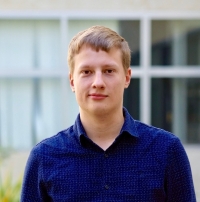
I am a graduate student in the Department of Cognitive Science at UCSD working in the Comparative Cognition Laboratory of Dr. Federico Rossano. A psychologist by training, I have spent the last years mainly studying the behavior and cognitive abilities of different ape species (gibbons, orangutans, gorillas, humans, bonobos, chimpanzees). My research aims at gaining insights about the ultimate and proximate origins of social cognition in humans and animals through comparative and developmental approaches. More precisely, I am asking questions such as:
- To what extent do cultures influence the social behavior in primate societies?
- How much intraspecific variation can be found in different primate species?
- What are the ultimate and proximate factors that lead individuals to either cooperate or compete with each other in specific interactions?
University of California San Diego
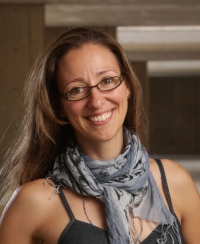
Maria Carolina (Carol) Marchetto is an Assistant Professor at the Anthropology Department, UC San Diego, and serves on the CARTA Internal Advisory Board. Dr. Marchetto earned a BSc in Biological Sciences in 1998 and a Ph.D. in Microbiology in 2005 from the University of Sao Paulo, Brazil. Dr. Marchetto moved to San Diego in 2005 for her postdoctoral research in stem cells and neuroscience in the lab of Dr. Fred Gage at the Salk Institute. Prior to her appointment at UC San Diego, Dr. Marchetto was a Staff Scientist at the Laboratory of Genetics at The Salk Institute where she led projects that studied neuronal development using human and nonhuman primate stem cells. Her current work focuses on using patient-derived induced pluripotent stem cells to study the cellular behavior of human neurons in neuropsychiatric and neurodevelopmental conditions such as Autism and Bipolar Disorder. Dr. Marchetto’s work is also focused on human evolution in the context of human brain expansion and neuronal development. Her innovative approach uses stem cell models from human and nonhuman primate species to test hypotheses about the role of disruptions to human-specific cellular and molecular signatures in development and their potential impact on mental health. She is a BRAINS Program Fellow, and her work has received funding from the National Institutes of Mental Health and the Larry L. Hillblom Foundation.

