
Miles Wilkinson
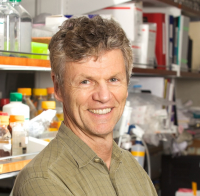
Miles F. Wilkinson is a Distinguished Professor in the Department of Obstetrics, Gynecology, and Reproductive Sciences at University of California, San Diego. His laboratory uses genetic, genomic, and molecular approaches to study intriguing problems relating to gene expression.
Dr. Wilkinson’s interest in neurobiology was initially spurred by his laboratory’s studies on a selective RNA turnover (decay) pathway called nonsense-mediated RNA decay (NMD). Since the 1990s, his laboratory defined various aspects of this highly-conserved biochemical pathway - from its regulation to its diverse biological functions to its evolution. Their first hint that NMD might have a role in the nervous system came from their studies identifying small non-coding RNAs—microRNAs—that regulate NMD factors. This work led to the discovery of a molecular circuit involving neurally-expressed microRNAs that downregulates NMD as a means to drive the initial steps of neural differentiation. Later, the Wilkinson laboratory shifted their attention to an enigmatic NMD factor—UPF3B—that they found was not required for the entire NMD pathway, but instead exhibited high selectivity for degrading specific transcripts. There was considerable interest in this particular NMD factor, as the laboratory of the human geneticist, Jozef Gecz, demonstrated that UPF3B mutations cause intellectual disability in humans. To understand the underlying mechanisms involved, the Wilkinson laboratory generated mice lacking UPF3B. They found that these Upf3b-null mice exhibited dendritic spine maturation defects in the cortex and had selective behavioral defects, including in pre-pulse inhibition and specific forms of learning and memory. These NMD-deficient mice also exhibited olfactory system defects, a common symptom prior to overt symptoms of human neurodegenerative diseases such as Parkinson’s and Alzheimer’s disease. Together, these findings (coupled with findings linking NMD with the nervous system from others in the field) led Dr. Wilkinson to hypothesize that alterations in NMD (such as its activity) over evolutionary time had a role in creating differences in the brains of different species. In support of this hypothesis, his laboratory along with the laboratory of Dr. Kun Tan (UCSD), identified a highly conserved regulatory element in a NMD gene that has properties suggesting it evolved in a manner that drove nervous system differences between humans and our closest living relative – the chimpanzee. This human accelerated region (HAR) - "HAR123" - is a transcriptional enhancer that drives human neural progenitor progenitor cell (NPC) formation, controls the ratio of neurons and glia generated from NPCs, and promotes cognitive flexibility.

