
Rachel Carmody
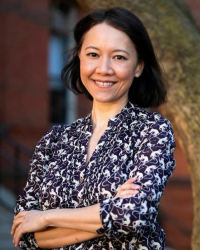
Rachel Carmody is the Thomas D. Cabot Associate Professor of Human Evolutionary Biology at Harvard University. Her research investigates how the human body acquires and uses energy, and how changes in energy metabolism have shaped human biology over time. Rachel received her Ph.D. in Human Evolutionary Biology from Harvard, where, as an NSF Graduate Research Fellow in the lab of Richard Wrangham, she investigated the evolutionary significance of thermal and non-thermal food processing. She subsequently completed an NIH Ruth L. Kirschstein National Research Service Award Postdoctoral Fellowship in Microbiology and Immunology at the University of California, San Francisco, where she studied how the gut microbiome responds to dietary variation in the lab of Peter Turnbaugh. Research in the Carmody Lab builds on discoveries over the past two decades showing that the gut microbiome plays a central but variable role in human energy metabolism, with its metabolic contributions dependent on ecological factors such as diet, physical activity, antibiotic use, and social interactions. With support from the NSF and NIH, her group investigates how these ecological factors shape the gut microbiome and, in turn, influence host metabolism. The lab is particularly interested in three questions: How do ecological factors trigger changes in the gut microbiome? How does the ability of the microbiome to respond rapidly to changing conditions shape host metabolic adaptability? And how and why do human gut microbiomes differ from those of other species? By addressing these questions, the lab seeks to connect proximate mechanisms with evolutionary explanations of human biology, expand our understanding of human adaptive flexibility, and identify potential opportunities for health-directed manipulation of the gut microbiome.

