
We Are What We Ate: The Diets That Fueled Human Evolution
Biographical Sketches: Co-Chairs
UC San Diego
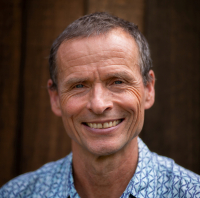
Pascal Gagneux is CARTA's Executive Co-Director, a Professor of Pathology and Anthropology, and the Department Chair of Anthropology at UC San Diego. He is interested in the evolutionary mechanisms responsible for generating and maintaining primate molecular diversity. The Gagneux laboratory studies cell-surface molecules in closely related primates species. His focus is on glycans, the oligosaccharides attached to glycolipids and glycoproteins of the surfaces of every cell and also secreted into the extra-cellular matrix. Gagneux's laboratory is exploring the roles of molecular diversity in protecting populations from pathogens as well as potential consequences for reproductive compatibility. Dr. Gagneux’s interest is in how glycan evolution is shaped by constraints from endogenous biochemistry and exogenous, pathogen-mediated natural selection, but could also have consequences for sexual selection. Dr. Gagneux has studied the behavioral ecology of wild chimpanzees in the Taï Forest, Ivory Coast, population genetics of West African chimpanzees, and differences in sialic acid biology between humans and great apes with special consideration of their differing pathogen regimes. In 2011, while Associate Director of CARTA, Dr. Gagneux helped to establish a graduate specialization in Anthropogeny at UC San Diego. This wholly unique graduate specialization is offered through eight participating graduate programs in the social and natural sciences at UC San Diego.
Stanford University School of Medicine
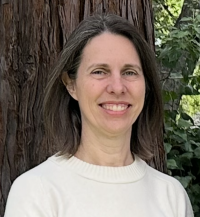
Erica Sonnenburg is a senior research scientist at the Stanford University School of Medicine in the Department of Microbiology and Immunology where she studies the role of diet on the human intestinal microbiota. Erica received her Ph.D. in Biomedical Sciences at the University of California, San Diego and did postdoctoral work at Washington University in Saint Louis in the laboratory of Jeffrey Gordon. She has published her groundbreaking scientific findings in prestigious journals such as Cell, Science, and Nature and is the co-author of the book The Good Gut: Taking Control of Your Weight, Your Mood, and Your Long-Term Health.
The Sonnenburg lab is currently focused on understanding basic principles that govern interactions within the intestinal microbiota and between the microbiota and the host. To pursue these aims, the lab applies systems approaches (e.g. functional genomics and metabolomics) along with human dietary intervention clinical trials to gain mechanistic insight into emergent properties of the host-microbial super-organism.
Biographical Sketches: Speakers
Harvard University
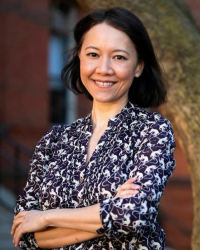
Rachel Carmody is the Thomas D. Cabot Associate Professor of Human Evolutionary Biology at Harvard University. Her research investigates how the human body acquires and uses energy, and how changes in energy metabolism have shaped human biology over time. Rachel received her Ph.D. in Human Evolutionary Biology from Harvard, where, as an NSF Graduate Research Fellow in the lab of Richard Wrangham, she investigated the evolutionary significance of thermal and non-thermal food processing. She subsequently completed an NIH Ruth L. Kirschstein National Research Service Award Postdoctoral Fellowship in Microbiology and Immunology at the University of California, San Francisco, where she studied how the gut microbiome responds to dietary variation in the lab of Peter Turnbaugh. Research in the Carmody Lab builds on discoveries over the past two decades showing that the gut microbiome plays a central but variable role in human energy metabolism, with its metabolic contributions dependent on ecological factors such as diet, physical activity, antibiotic use, and social interactions. With support from the NSF and NIH, her group investigates how these ecological factors shape the gut microbiome and, in turn, influence host metabolism. The lab is particularly interested in three questions: How do ecological factors trigger changes in the gut microbiome? How does the ability of the microbiome to respond rapidly to changing conditions shape host metabolic adaptability? And how and why do human gut microbiomes differ from those of other species? By addressing these questions, the lab seeks to connect proximate mechanisms with evolutionary explanations of human biology, expand our understanding of human adaptive flexibility, and identify potential opportunities for health-directed manipulation of the gut microbiome.
Dartmouth College
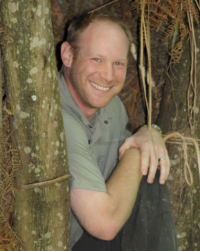
Nathaniel Dominy is an anthropologist and evolutionary biologist. He studies the behavior, ecology, and functional morphology of humans and nonhuman primates. His research philosophy is to integrate tropical fieldwork with mechanical, molecular, and isotopic analyses in order to better understand how and why adaptive shifts occurred during primate evolution.
Harvard University
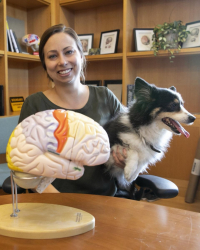
My lab’s research asks how brains change in response to selection pressure on behavior, and how brains acquire heritable adaptations for complex, learned behaviors. Comparisons between modern humans and our living primate relatives provide a way to address this question in the context of our own evolutionary history. In addition, we can learn about general mechanisms of brain-behavior evolution by studying “unnatural selection” in intentionally-bred animals. Current areas of focus include neural and behavioral variation in domestic dog breeds and domesticated foxes, neural plasticity in humans during the acquisition of skills for which we have innate predispositions, and the relationship between individual variation in initial brain anatomy and predisposition to acquire new learned skills. The lab’s methods include structural and functional neuroimaging in living humans and dogs, and fixed brains of various species; histology; and behavior measurements.
Washington University in St. Louis
Dr. Lora Iannotti is the Lauren and Lee Fixel Distinguished Professor in the Bursky School of Public Health and founding director of the E3 Nutrition Lab. Her lab aims to identify nutrition solutions that embrace the principles embodied in the three E’s: equity, environment, and evolution. Dr. Iannotti leads projects in Ecuador, Haiti, and St. Louis, Missouri where she collaborates with local partners to test innovative approaches to achieving sustainable, healthy dietary patterns that improve young child growth and brain development. Her research related to animal source foods has informed the global discourse on nutrition equity, climate change, and food biodiversity.
Dr. Iannotti is co-director of the Food and Agriculture Research Mission (FARM) research network at the Bursky School of Public Health and planetary health scholar at the Center for the Environment at Washington University in St. Louis. Dr. Iannotti serves on several global working groups to inform research and policy on maternal and child nutrition, including with the World Health Organization and UN Food and Agriculture Organization.
Salk Institute for Biological Studies
Gerald F. Joyce is President and Professor at the Salk Institute for Biological Studies in La Jolla, California, and a Co-director of CARTA. Dr. Joyce received his BA from the University of Chicago in 1978 and both an MD and PhD from the University of California, San Diego in 1984. He carried out postgraduate medical training at Scripps Mercy Hospital in San Diego and postdoctoral research training at the Salk Institute before joining the faculty of The Scripps Research Institute in 1989. In 2017 Dr. Joyce moved his laboratory to the Salk Institute, where it is part of the Jack H. Skirball Center for Chemical Biology and Proteomics. While continuing his academic faculty appointment, he served as the Institute Director of the Genomics Institute of the Novartis Research Foundation (GNF) from 2014 until 2021. Dr. Joyce’s research involves the test-tube evolution of functional RNA and DNA molecules and their potential application in clinical diagnostics and therapeutics. He has a longstanding interest in the origins of life and the role of RNA in the early history of life on Earth. His research has led to the development of the first self-replicating RNA enzyme, which is capable of exponential growth and evolution. It also has led to the development of an RNA enzyme that catalyzes the polymerization and exponential amplification of other RNA molecules.
SUNY at Buffalo
Stefan Ruhl is a professor and chair of Oral Biology in the School of Dental Medicine at the University at Buffalo, New York, USA. His research seeks to unravel the roles that saliva and microorganisms play in health, including in adhesion to teeth and surfaces of the mouth, defense against pathogens, and colonization of the oral cavity. Ruhl joined the UB faculty in 2007 from the University of Regensburg, Germany, where he was a Professor of Operative Dentistry and Periodontology and actively participated in clinical and academic student teaching and patient treatment. He obtained his D.D.S. in 1984 and his Ph.D. in Immunology in 1988 from the Georg-August University, Göttingen, Germany. Following a residency in private dental practice, he pursued post-doctoral studies at the National Institute of Dental and Craniofacial Research (NIDCR) in oral microbial ecology. In 1995, he joined the faculty at the University of Regensburg, where he became a Professor of Operative Dentistry and Periodontology in 2004. In 2007, he joined the Department of Oral Biology at the University of Buffalo, where he now studies the molecular mechanisms of glycan-mediated bacterial adhesion to salivary glycoproteins from an evolutionary perspective. He has been the scientific mentor to more than a dozen D.D.S., Ph.D. students, and postdoctoral fellows. He is a past President of the Salivary Research Group within the International Association for Dental Research (IADR). In 2015, he was named IADR Salivary Researcher of the Year, and in 2020, received the IADR Distinguished Scientist Award in Salivary Research, the University at Buffalo Exceptional Scholar Award for Sustained Achievement, and was elected as Fellow of the American Association for the Advancement of Science (AAAS). In 2023, he was elected as a Fellow of the International College of Dentists, and in 2024, a Fellow of the American Association for Dental, Oral, and Craniofacial Research (AADOCR). His scientific projects have been funded through the NIDCR since 2010. He is a member of several major professional and scientific societies, the Editor-in-Chief of Clinical Oral Investigations, and an Associate Editor of the Journal of the American Dental Association Foundational Science (JADA-FS). From January 2022 until May 2023, he served as Interim Dean of UB's School of Dental Medicine.
Publications:
Stanford University
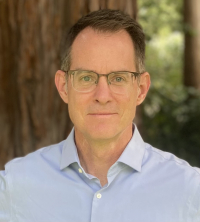
Justin Sonnenburg, PhD, is the Alex and Susie Algard Endowed Professor in the Department of Microbiology and Immunology at the Stanford University School of Medicine, where he studies the gut microbiota in health and disease and co-directs the Center for Human Microbiome Studies. His laboratory at Stanford develops and employs diverse technologies to understand basic principles that govern interactions within the intestinal microbiota and between the microbiota and the host. An ongoing objective of the research program is to devise and implement innovative strategies to prevent and treat disease in humans via the gut microbiota. Justin conducted his Ph.D. in Biomedical Sciences at the University of California, San Diego in the laboratory of Ajit Varki. His postdoctoral work was conducted at Washington University in Saint Louis, Missouri in the laboratory of Jeffrey Gordon. He has received an NIH Director’s New Innovator Award and Pioneer Award, the AGA Research Mentor Award, and co-founded Interface Biosciences. He and his wife and collaborator, Erica, are the authors of the book The Good Gut: Taking Control of Your Weight, Your Mood, and Your Long-Term Health (Penguin Books, 2016).
University of Colorado Boulder
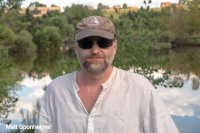
Sponheimer does research on the ecology of early hominins and associated fauna in Africa. He has also directed and co-directed several multi-disciplinary projects on the ecology of living mammals, both large and small, in South Africa.
Yale University
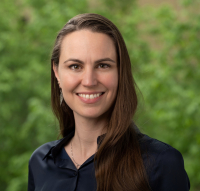
Jessica Thompson is a paleoanthropologist based at Yale University and at the Yale Peabody Museum. She studies how environmental change shaped early human economies, social relationships, and population histories, even as humans gained increasing control over those environments. Her work targets three periods of key behavioral change in the human story: 3.5-2.5 million years ago (at appearance of the first stone tools), 130-60 thousand years ago (a time of accelerated technological and symbolic innovation), and 60 – 2 thousand years ago (the global spread and diversification of Stone Age foragers). Thompson is an expert on the analysis of animal bones from archaeological sites and leads field projects in the Zambezian ecosystem of southern-central Africa (Malawi and Zambia). Her fieldwork in Malawi has resulted in recovery of early evidence of human ecosystem engineering through landscape burning, discovery of the oldest adult cremation pyre, and publication of some of the oldest human DNA in Africa. Her research on older time periods in Ethiopia has led to a new model for understanding one of the most important dietary transitions in human evolution: the regular consumption of large animals. She is passionate about the translation of paleoanthropological research to broader audiences, and her work has been highlighted in outlets such as the New York Times, NPR, CNN, and the Washington Post. For more information about Dr. Thompson and her work, please visit https://campuspress.yale.edu/jcthompson/
UC San Diego School of Medicine
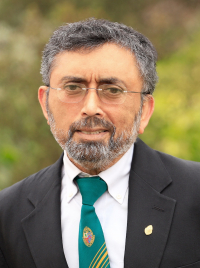
Ajit Varki is a Distinguished Professor of Medicine and Cellular & Molecular Medicine, Emeritus Co-Director of CARTA, Emeritus Co-Director of the Glycobiology Research and Training Center at UC San Diego, and Adjunct Professor at the Salk Institute. He received basic training in physiology, medicine, biology, and biochemistry at the Christian Medical College (CMC), Vellore, The University of Nebraska, and Washington University in St. Louis. He also has formal training and board certification in internal medicine, hematology, and oncology. Varki is the executive editor of Essentials of Glycobiology (Cold Spring Harbor Press, 4th Edition, 2022) and is recipient of a MERIT award from the NIH, and an American Cancer Society Faculty Research Award. Honorific elections include the American Academy of Arts and Sciences, the National Academy of Medicine, the American Society for Clinical Investigation, and the Association of American Physicians. He is also recipient of the three highest honors in his field, the Karl Meyer Award of the Society for Glycobiology, the International Glycoconjugate Organization Award and the Rosalind Kornfeld Award for Lifetime Achievement in Glycobiology. He is recognized for creating the first major open access research journal (J. Clin. Invest., 1996) as well as the first major open access textbook (Essentials of Glycobiology, 2009). He was honored with the Old Cottonian of Eminence Award at the 150th Anniversary of Bishop Cotton Boys School, Bangalore, India, (2015) as well as a Distinguished Faculty Medal and Oration at his medical school alma mater, CMC, Vellore. Significant past appointments include: Co-Head, UC San Diego Division of Hematology-Oncology; President of the Society for Glycobiology; Editor-in-Chief of the Journal of Clinical Investigation; Interim Director of the UC San Diego Cancer Center, President of the American Society for Clinical Investigation, and UC San Diego Associate Dean for Physician-Scientist Training. Varki's research interests are focused on a family of cell surface sugars called sialic acids, and their roles in biology, evolution and disease. Currently, active projects are relevant to the roles of sialic acids in microbial infectivity, the regulation of the immune response, the progression and spread of tumors, aging, and unique aspects of human evolution. His group is particularly intrigued to find multiple interrelated differences in sialic acid biology between humans and our closest evolutionary cousins, the "great apes." These differences are a signature of the events that occurred during the last few million years of human evolution, and appear to be relevant to understanding several aspects of the current human condition, both in health and disease. Varki’s book, Denial (Twelve, Hachette Books, 2013), explores a novel "Mind Over Reality Transition” (MORT) theory that denying reality and personal mortality was a key step in allowing the emergence of a full theory of mind, and in the origin of our species.

